
Category: Newsletter

Our feeding story – Bethan

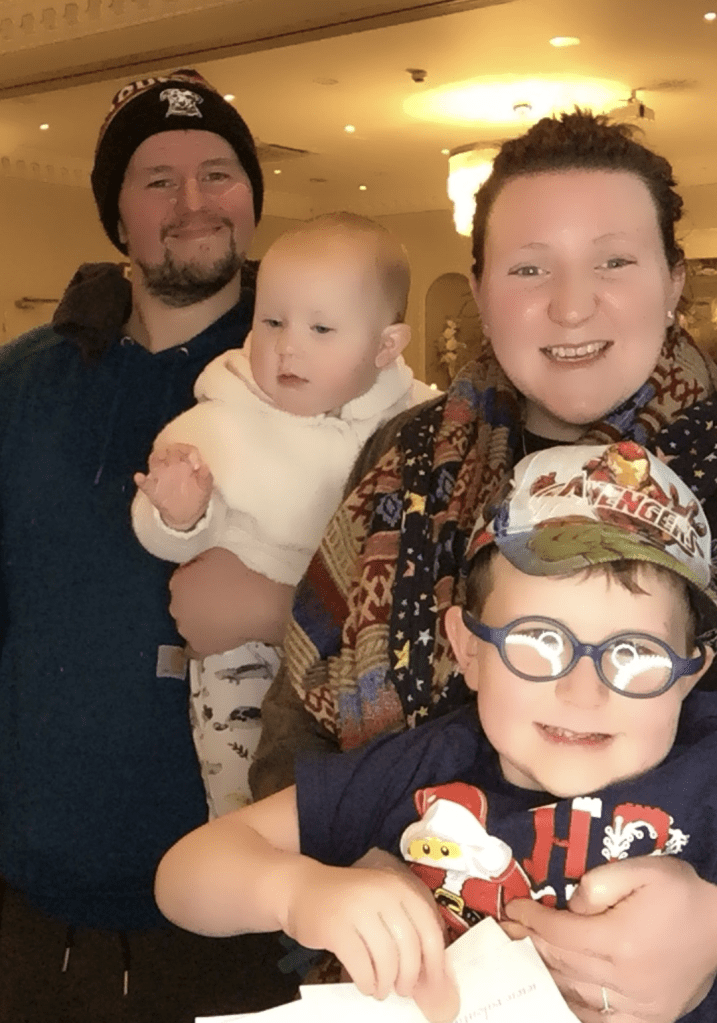
Bethan tells us about her experiences feeding Jacob and Isla, which led to her training as a Peer Supporter with Treasure Chest. You’ll often find her volunteering at our group at Acomb Methodist Church on a Friday morning.

‘My breastfeeding journey started with my son, who I fed until he was two years eight months old. Our journey was tricky to begin with as we had a long and traumatic birth experience that involved forceps and a hefty postpartum haemorrhage. I know now that breastmilk is made from blood and so, as I’d lost so much, my body took a little longer to produce milk. I was also extremely weak, exhausted and in shock after the birth. I was unconscious for roughly the first 12 hours of my son’s life so didn’t get the skin to skin or initial breastfeeding opportunities that I would have had otherwise. Of course, Jacob found this all very stressful too and was very distressed. I have very vague memories of trying to latch him and then another little memory of attempting to hand express colostrum into a syringe in an attempt to feed him.

The lactation support team visited me and their advice was great as was many of the midwives, particularly ones working nights. However, at day three, Jacob had lost too much weight (around 12.5 per cent) and was put onto a feeding regime. I was shocked and heartbroken, realising that he may have been crying with hunger the whole time. We pushed through to day five of three-hourly breastfeeds, pumping, bottle feeding expressed milk and bottle feeding formula top ups. Thank God for the Maternity Care Assistants overnight who helped feed Jacob a bottle while visitors weren’t allowed! Jacob’s weight was back up and we were discharged.

At home, on day six, my milk came in! After that, I chose to no longer follow the feeding regime and exclusively breastfeed. I had lots of support from the community midwives that I had seen whilst pregnant and managed to get half-decent positioning and attachment but suffered with sore nipples. At the time I didn’t really know better and pushed through.

However, things did improve as Jacob began putting on up to a pound a week and as he got bigger and stronger, feeding became so much easier! We went on to have an amazing breastfeeding relationship for about two years… then the aversion set in. We night weaned and Jacob’s sleep did actually improve (not a guarantee) and gradually dropped more and more feeds, pushing through the aversion until we eventually stopped feeding in the November before his third birthday…

In the December we found out I was pregnant with number two!

Baby number two was such an incredibly different experience. Having had an amazing breastfeeding journey beforehand and feeling that I was much more informed, I was much more confident going into this next breastfeeding journey. It was still hard at the beginning as baby learned to feed and I had to adapt to feeding a newborn, with no head control, again. I spoke to my midwife a lot through my pregnancy and we had a big debrief about my previous birth experience. Second time round the birth was much less traumatic. So we had a better head start than first time round. Fortunately, Isla took to breastfeeding like a dream and we are still feeding now at 18 months old with no current plans to attempt to wean.’ 

Festive feeding

Read our community’s top tips for feeding your baby or toddler this season.

Baby’s first Christmas can be an exciting time – all those cute photo opportunities, seeing them entranced by twinkly lights and picking out some lovely presents. But it can also be a time when you run into some problems with feeding your baby. It’s good to be prepared, so here are some tips from local parents who have been there…

Some babies and toddlers can get easily overwhelmed at a seasonal party or event with lots of new people and noise. A breastfeed can be a great way to calm down and reconnect when everything has got too much.

Two mums from our community gave reminders that babies don’t yet know the calendar:

‘Baby doesn’t know it’s Christmas day – it’s OK to delay the festivities by a few days or weeks until you feel that breastfeeding is established.’

‘Don’t feel pressured to attend family gatherings or give in to pressure from people to parade your baby around at Christmas. If you want to stay at home and snuggle in your newborn bubble, you don’t need anyone’s permission to do so.’

For many of us, this time of year comes with invitations to parties with family, friends or colleagues.

Big family gatherings sometimes result in babies being passed round lots of people as everyone wants a cuddle with the newest addition. If feeding cues are missed, the baby can end up hungry, and the feeding parent feeling uncomfortably engorged. You can find tips for when engorgement is a problem in this article. Top tip from an experienced parent: ‘Consider using a sling to help keep the baby pass-the-parcel to a minimum. People are less likely to insist on having cuddles with a baby who is clearly snuggled in a sling sleeping.’

If you’re meeting up with people you haven’t seen for a while, you might like to find out in advance what people’s opinions may be on breastfeeding so as to choose your strategy beforehand (instead of it being a mood-ruiner on the day). Maybe you’d rather discreetly feed in another room, or maybe you want to prepare your arguments and data to rebuff someone who is bothered by breastfeeding in public, feeding responsively, feeding toddlers, or whatever you’re going through at the moment!

Despite the gorgeous photo we found to illustrate this article, we’ll leave you with this thought from one of our Peer Supporters…

‘You don’t have to have matching Christmas pjs and a special photo shoot to make lovely memories.’

Our feeding story – Laura

Laura explains why she’s training to be a Peer Supporter

I completed the Treasure Chest antenatal workshop while pregnant and had high hopes for our breastfeeding journey. It’s something I have always known I wanted to do, and as we ended up conceiving our son through IVF, it became even more important to me after how much medical intervention we had needed for the rest of the process.

Unfortunately my son and I had a difficult start – he had a tongue tie which was released at four weeks. I experienced terrible engorgement because he wasn’t able to drain the breast, nipple damage, excruciating pain, and my son’s weight gain was static.

My midwife thankfully noticed the tongue tie at a routine visit and while we waited for the referral I decided to attend one of the Treasure Chest drop in sessions in Heworth.

As soon as I stepped in, I knew I could relax. It immediately felt like a safe place – like I was just meeting some brilliant and kind mums for a natter.

I received incredible support (with some amazing tea and cake!) and latch tips to see us through until the tongue tie release. The warmth and understanding of the Peer Supporter I saw that day gave me the strength to keep going, one feed at a time.

We made it to the tongue tie release but the weeks that followed continued to be uncomfortable as my son relearned how to feed. I invested in a visit from an IBCLC (International Board Certified Lactation Consultant) and attended further Treasure Chest drop in sessions and things continued to improve.

My son’s weight was climbing up the charts – I even remember my Health Visitor saying to me, ‘You’ve got some serious grit!’ and I felt so proud. We’re still happily breastfeeding at nine months with no intention to stop. It is without a doubt my proudest achievement.

I’m now training to be a Peer Supporter; I hope to be able to support more parents on their feeding journey, like I was supported by Treasure Chest. It’s become a real passion for me because I don’t think that feeling when you are desperate to feed and bond with your baby through breastfeeding will ever leave me. It saddens me to hear from friends who unfortunately didn’t get the support they needed and stopped their breastfeeding journey before they were ready. I hope through Treasure Chest I could help prevent that for more mums.